The International Climate Action Network (I-CAN) has just reached the end of its 30-month run with Liverpool World Centre leading the project. Working with 5 partners across 4 countries, the project achieved landmark successes in reaching nearly 1800 teachers (both and in-training) and teacher educators. In April this year, teachers who are part of this network got together to celebrate their success and share their learnings. In the article below, we sharing two accounts of I-CAN resources being employed and the impact of these activities from the perspective of teachers and pupils.
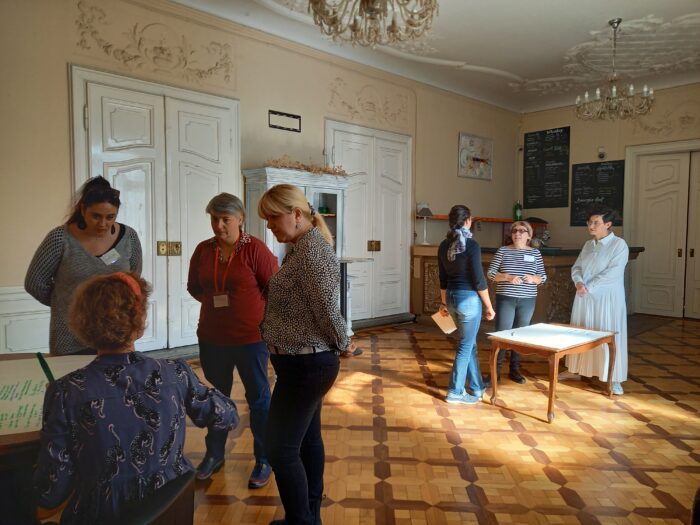
When the Climate Game was shared with pupils at Chesterfield High School in Sefton, Merseyside, the teacher found it simple to explain and flexible enough to be adapted to the needs of her group. The game was used as part of a unit of work exploring the impact of climate change on people. In the game, the young pupils had the opportunity to act as if they are in someone else’s shoes. enabling them to focus on a key element of climate justice which is ‘inequality’. Working in pairs, the young people received a role card and they had to then imagine what this person’s life would be like and how it was affected by climate change. The game then presented various scenarios in which each pair had to decide what the person they were embodying would decide. Agreeing means taking a step forward. If they disagree, they stand still. At the end of the game, the pupils were spread all around the room which was in fact a visual presentation of the wide range of unequal impact on different people of the climate emergency. It was observed that
…the activity enables learners to critically engage with others’ lived experiences. They seemed better able to have detailed conversations and critically engaged… Many pairs were passionate about their decision making and soon got into playing their role and began to question other pairs about their positioning and could see that some privileged lives were hardly touched at all.”
It was noted that the activity was especially useful in a class where discussion is otherwise difficult to get going. The teachers (??) felt that the activity also positively contributed to the development of empathy and confidence in their pupils.
The classroom teacher who introduced the activity commented that they are now keen to “open conversations with my colleagues on how they could teach climate justice in their subjects.”
Participatory methodologies in the classroom can be empowering for both teachers and pupils. The teacher also said that the experience of using a range of new resources and approaches in the classroom had increased their own professional competence and led to a new role in a school putting this focus at the center of their curriculum.
‘’ I have enjoyed taking part in the I Can project as it has provided me with greater knowledge of what I can do as an educator to inform younger generations about climate issues and how they are impacted by them and what they can do to make a difference. I see it as an essential right that they are given the tools and information to protect their future and understand climate justice. ‘’